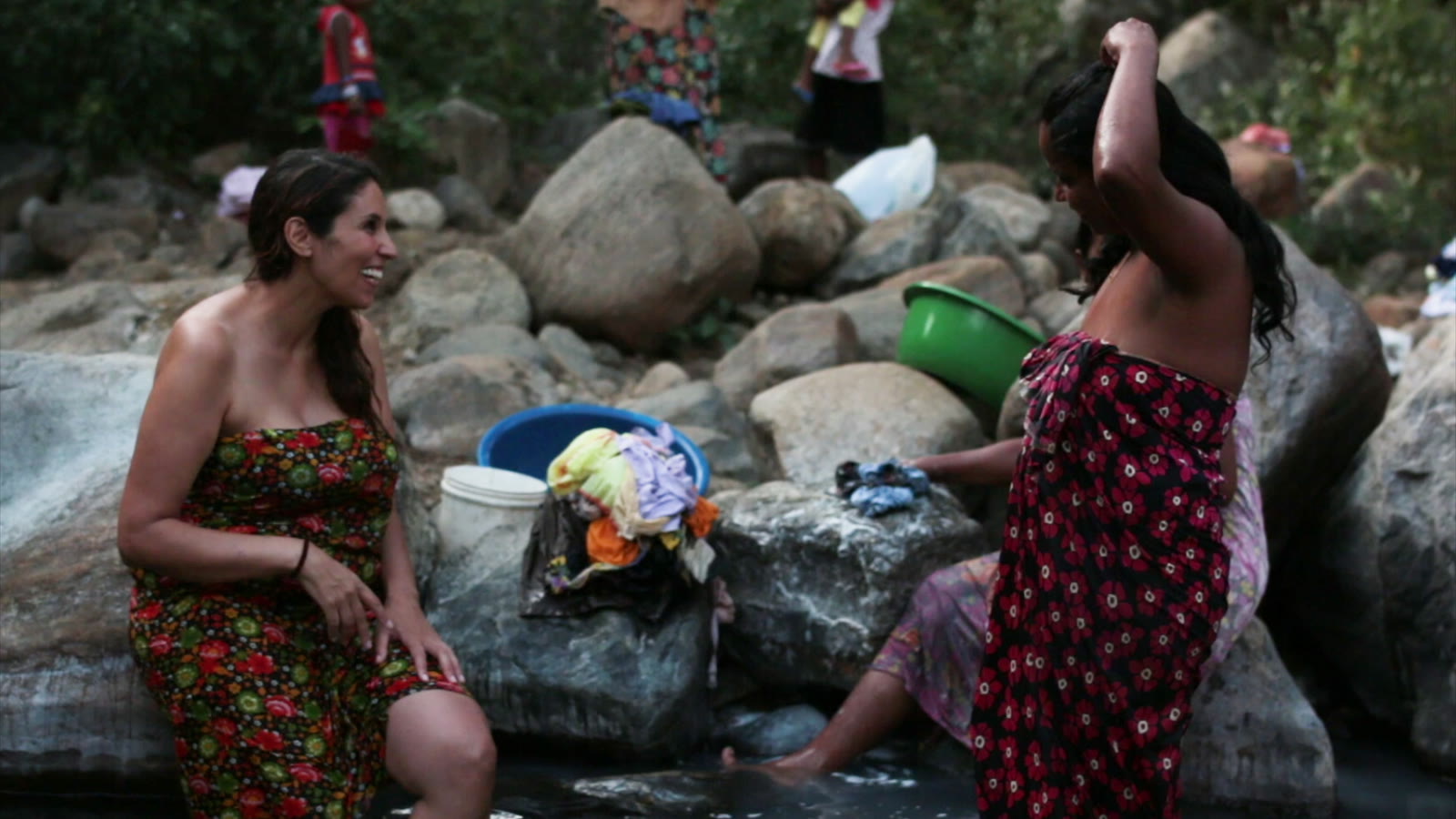
We’ve been travelling with our daughters since 2016. Three years in Asia, then the overland route to India. Two feature documentaries came out of it. No glossy footage, no drone sunsets — just the record of a family that actually went through with it, including the parts that went badly.
Two minutes. Then you’ll know if this is for you.
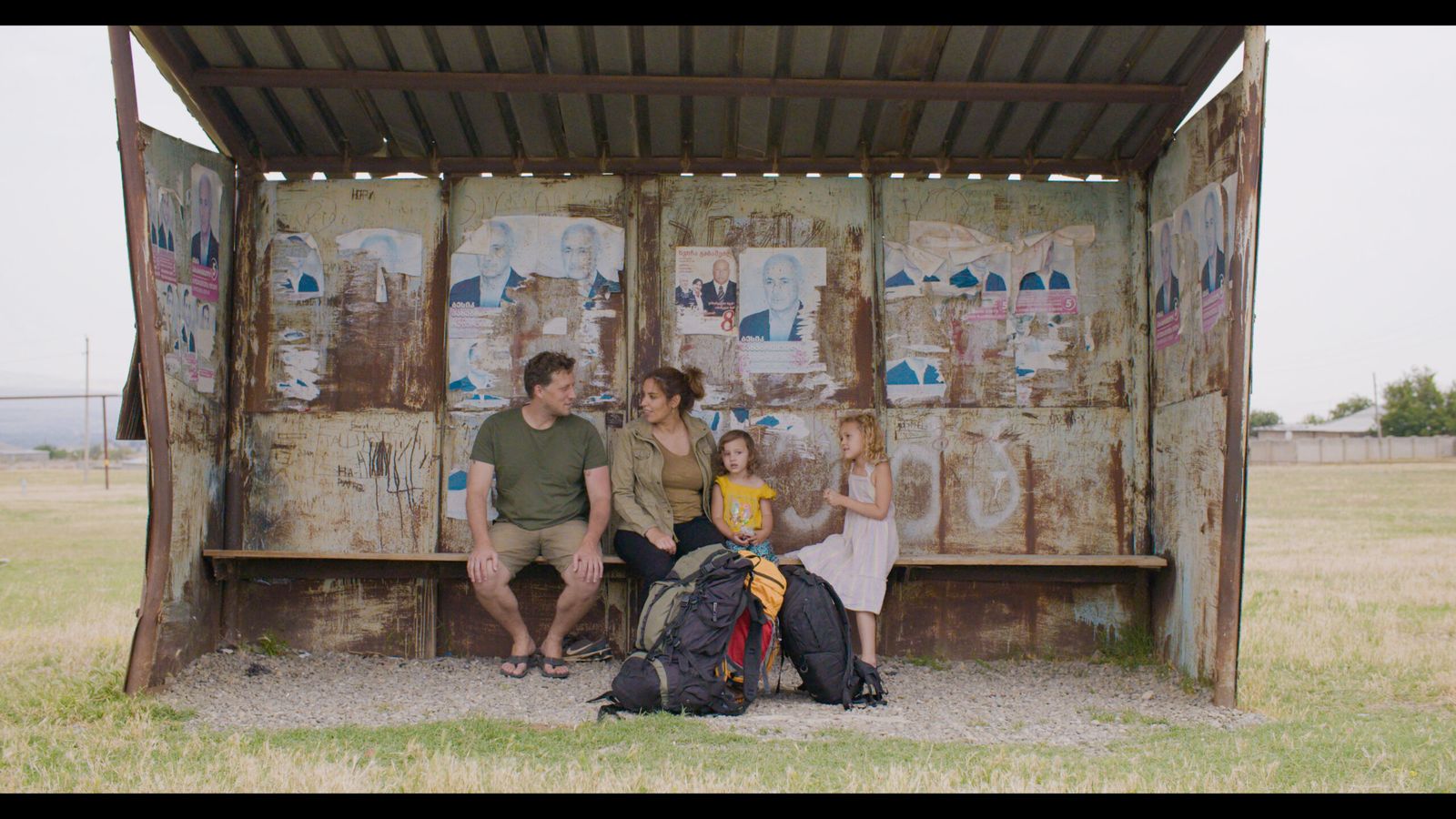
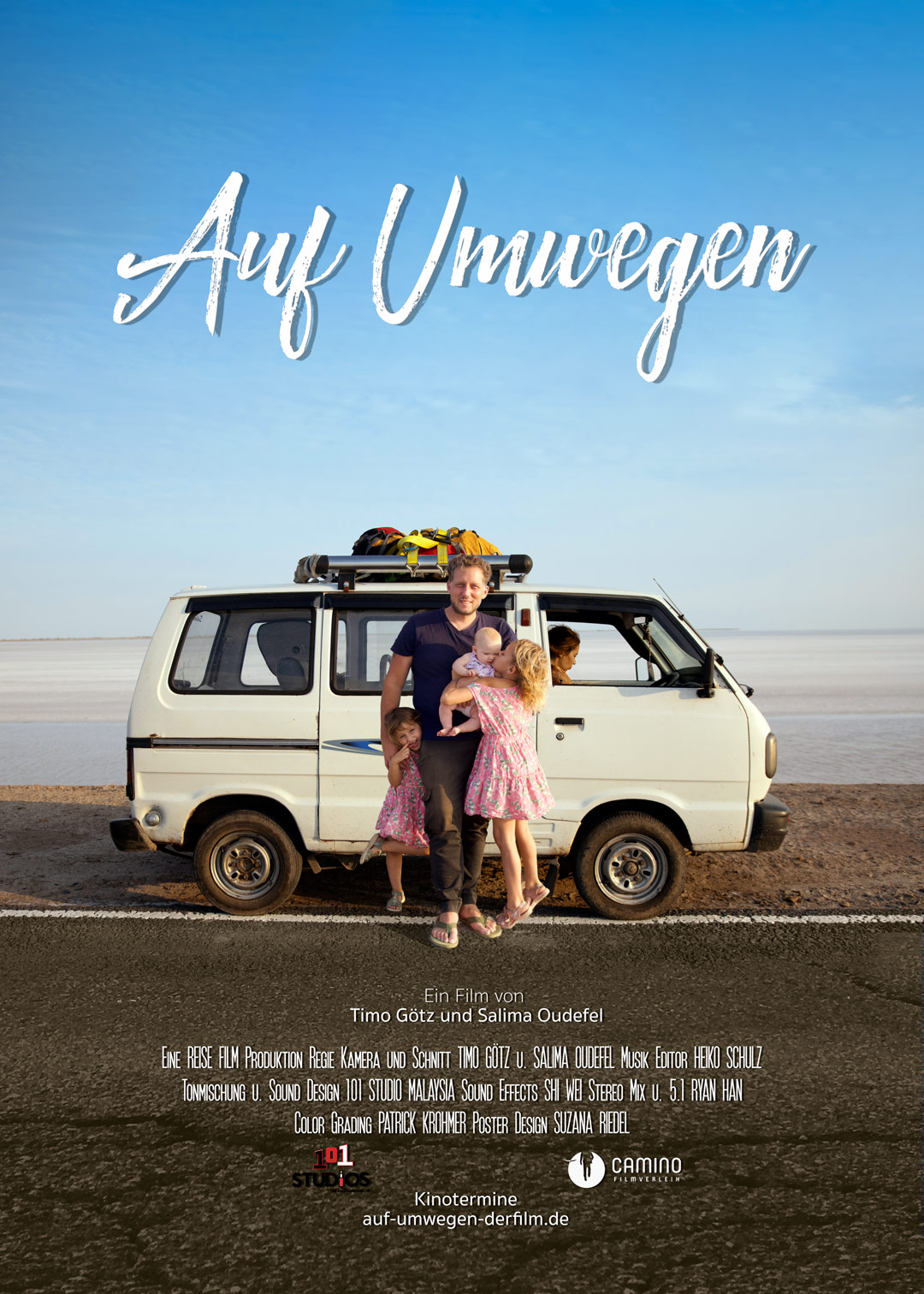
Overland to India. Somewhere along the way Salima got pregnant. Our daughter was born in Goa — and then India wouldn’t let us leave. Ten months stuck, an accusation of surrogacy, our savings almost gone. This film shows the moments when we didn’t know how to keep going, too. Especially those. Full credits and details: Detour to Adventure on IMDb · Detour to Adventure on Wikipedia (German).
Screened in more than 41 cinemas across Germany. 20 of them brought it back by audience demand — over 87 extra screenings.
Where it all started.

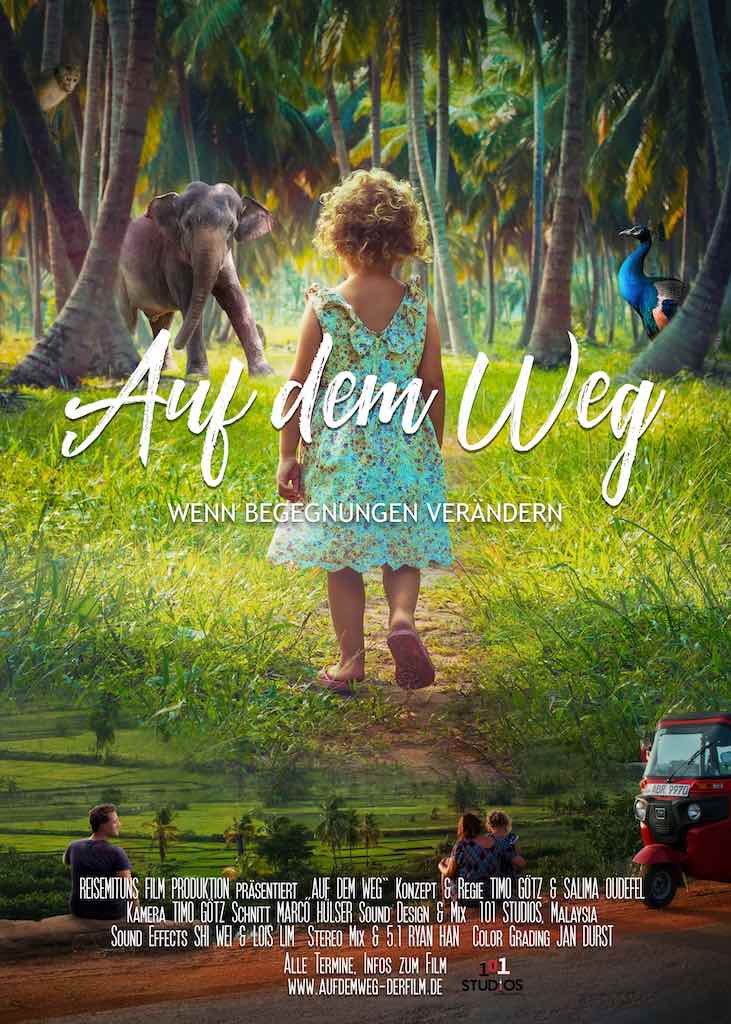
In 2016 we sold everything. Three years in Asia with one small child, then two. We didn’t know what we were looking for. What we found was people. This film shows what happens when you really listen — no shooting schedule, no safety net, no return ticket. Full credits and details: On the Way on IMDb · On the Way on Wikipedia.
We’re not dropouts. We’re a family that films. In 2016 we gave up our flat, our first child was five months old, and we had no plan — just a route and a willingness to be surprised. The one year we’d planned turned into three. One child turned into two.
More than 300 hours of footage came out of it — not because we were looking for a format, but because as a documentary filmmaker I couldn’t stop watching. The first cut was all beauty. We threw it away. What’s left are hospital corridors in India, a border post where nobody knew what to do with us, and conversations with people who owed us nothing and took us in anyway.
Our children are in both films, and they watch them today. That’s why there’s nothing hidden and no scene where a child is used to make a point. They’re not scenery — they’re the second and third main characters. Anyone watching sees a childhood where the world is the classroom and nobody follows a curriculum, just the questions that come up along the way.
Both films are travel documentaries, but they’re not travel guides. They don’t show a route you can copy or a packing list. They show what long-term travel does to a family — what holds it together, what it costs, and what happens when a country suddenly won’t let you continue. If you want to know what everyday life on the road is like, you’ll find it in Traveling with Kids and in the articles on our blog.
Nothing here disappears like a post: 57 cinemas across Germany have shown our films. Every dot is one evening with a real audience, a conversation afterwards, people staying behind. That is what we get booked for — not reach on a feed.
Detour to Adventure screened in more than 41 cinemas across Germany. 20 venues brought it back by audience demand — more than 87 extra screenings. Every one of them was an evening with an audience and a conversation, not a click.
The films have been covered by ZDF, ARD, SWR, 3sat, SAT.1, Stern, Zeit Online, GEO Television, Deutschlandfunk Nova and Frankfurter Rundschau, among others. Press kit and images are on our press page.
Both films are shown in schools regularly — not as a treat before the holidays, but as material for a conversation that keeps going afterwards. What a family experiences on the road doesn’t fit on a worksheet, but it’s very good to argue about.
A shortened version or the full film, followed by a prepared discussion: meeting strangers, bureaucracy, family life on the road. Secondary school, 90 to 120 minutes, on site or online, in English or German.
A single-use licence for non-commercial school screenings. You also get discussion questions and prompts for Geography, Ethics, Social Studies and Media Literacy — you don’t need us in the room.
On request we’ll send questions and a short text in advance. Students come to the film prepared and leave with something to talk about.
60 to 90 minutes with film clips, photographs and maps: how do you travel 21,000 kilometres overland, and what do you learn about people along the way? For cultural venues, clubs, libraries and companies, on site or online.
We agree date, format and fee personally — there’s no price list, because every event is different. Send us the place, the date and the year group, and we’ll come back with an offer.
Detour to Adventure is on Apple TV and on Amazon Prime Video — on Amazon you can buy it for €9.99 or rent it for €3.99, and it isn’t part of a Prime subscription. Amazon carries it only in its German store, under the original title “Auf Umwegen”; English subtitles are included. On the Way runs on Amazon via the Sooner channel and on RTL+. Both films are also available straight from us as a download, with no subscription and no account.
One film is $9.99, both together $16.99. You pay once — no subscription, no rental window. You download the film as a file and keep it on your own drive.
Every download from us includes subtitles in nine languages: German, English, French, Spanish, Russian, Italian, Japanese, Hindi and Arabic. On Apple TV and Amazon you get the four languages those platforms carry.
Yes. We do screenings with a filmmaker Q&A, travel talks and school screenings — with discussion material for the classroom. Write to us through the partners page and we’ll sort out format, date and licence.
Detour to Adventure has no age restriction. We show both films to school classes regularly. These are real journeys with real difficulties — not children’s films, but films that children often understand better than adults do.
The third feature starts filming in 2027. We’ll set off in a camper with no fixed end date. What happens along the way, we don’t know either.
Pay once, with subtitles in nine languages, no subscription and no account. Take both and it costs less.
The German edition of our work is at weltklassenzimmer.de, the film’s own website at auf-umwegen-derfilm.de. How we live on the road is on our story page.